My Journey Building an Anonymous Feedback Platform with AI
Every developer has that moment where they decide to dive into a project just to see what happens. Mine came during my sabbatical, when I found myself with time to explore and experiment. I’d been hearing so much about AI-driven development that I wanted to experience it firsthand — not just play around with it, but build something real that could actually be used.
Why Anonymous Feedback?
Back in 2017, Sarahah took the world by storm. The concept was simple yet powerful: a platform where people could receive anonymous feedback. It sparked conversations, created moments of unexpected honesty, and yes, sometimes drama. But there was something fundamentally interesting about the psychology behind it — our desire to know what others truly think of us, and others’ willingness to share when the barrier of identity is removed.
With the rise of AI tools promising to revolutionize development, I thought: why not revive this concept as my learning project? And thus, Honestbox was born — not just as a clone, but as my personal playground for exploring what modern development looks like in the age of AI assistance.
The Technical Journey
Tech Stack and Initial Decisions
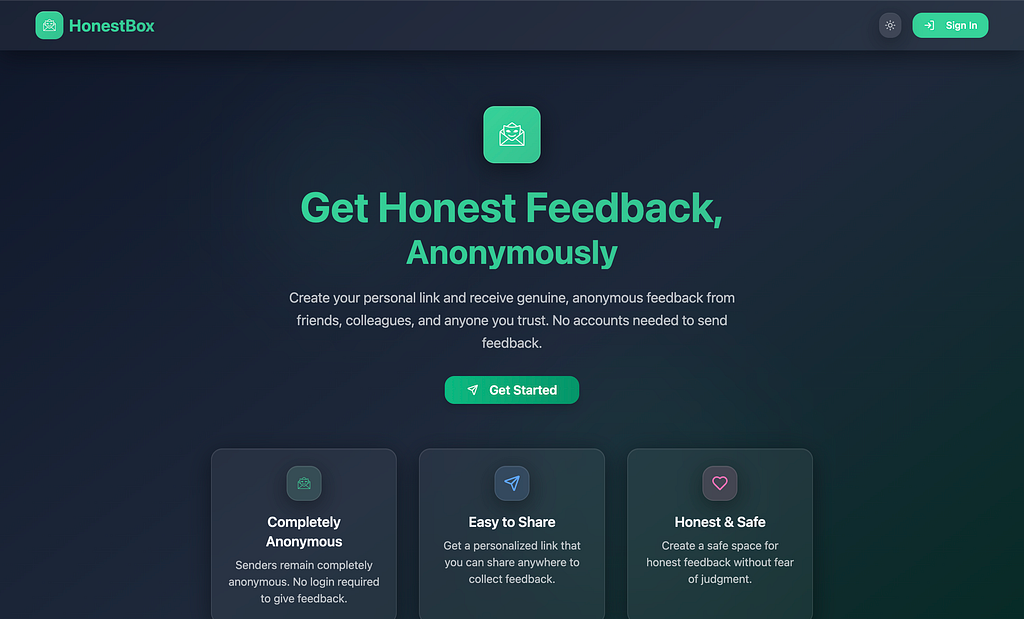
I settled on React for the frontend — familiar enough to be comfortable, but with enough complexity to test AI’s capabilities. For the backend, I chose Supabase, curious about how AI would handle integrating with a modern backend-as-a-service platform.
My first major decision was which AI tools to use. After some research, I landed on two primary assistants:
- Lovable: A code generation platform promising to help build MVPs quickly
- Cursor: An IDE with integrated AI features for ongoing development
Little did I know how much I would learn about the strengths and limitations of each.
Building the MVP with Lovable
Lovable shined in the early stages. I needed boilerplate code to get the project off the ground, and it delivered quickly. Within hours, I had a functioning anonymous feedback system with basic user management, message storage, and a simple UI.
The experience was almost magical at first. I would describe what I wanted, and code would materialize before my eyes. But as with any technology, the honeymoon phase didn’t last forever.
As I began requesting more specific features and UI improvements, I discovered the first major learning: AI credits disappear quickly when you’re building a real product. Each iteration and change counted against my monthly allotment, and I found myself becoming increasingly strategic about what I asked for.
Transitioning to Cursor for Refinement
Once I had the basic MVP functioning, I synced my code to GitHub and transitioned to Cursor. This was a game-changer for two reasons: Cursor offered unlimited completions for certain models, and I found that the Claude-4-Sonnet thinking model produced excellent results — sometimes even better than directly using Claude-4-Sonnet itself.
With Cursor, I could focus on refining features and improving user experience without constantly watching a credit counter tick down. The tool became my pair programmer, helping me think through implementation details and fix bugs that emerged.
The Challenges That Taught Me Most
Prompts and LLM model dictate the results
One of my most painful learning experiences came from a prompt i gave to lovable. I simply asked Lovable to “update the theme of the app.” which i asked for suggestion from chatgpt. The code lovable generated looked fine at first glance. Big mistake.
When I tested on mobile browsers, the UI was completely broken. Elements rendered a very different color which was never written by lovable. This taught me my second major lesson: different LLM models behave very differently. AI can’t read your mind about implementation details or testing environments.
After moving the code locally, I gave Cursor a more detailed prompt specifying exactly what I needed. The difference was night and day — Cursor delivered a responsive theme that worked beautifully across devices.
The Instagram Integration Challenge
My vision for Honestbox included easy sharing on Instagram — I wanted users to request feedback and share their Honestbox link seamlessly. This became one of the most challenging aspects of the project because Instagram’s restrictions don’t allow deeplink integration with web apps (only mobile apps).
Neither AI assistant had a ready solution for this platform-specific limitation. This was a humbling reminder that AI tools excel at generating code but can’t overcome platform restrictions. I ended up implementing a compromise solution, providing users with easily copyable links and clear instructions for sharing.
The Logo Generation Fiasco
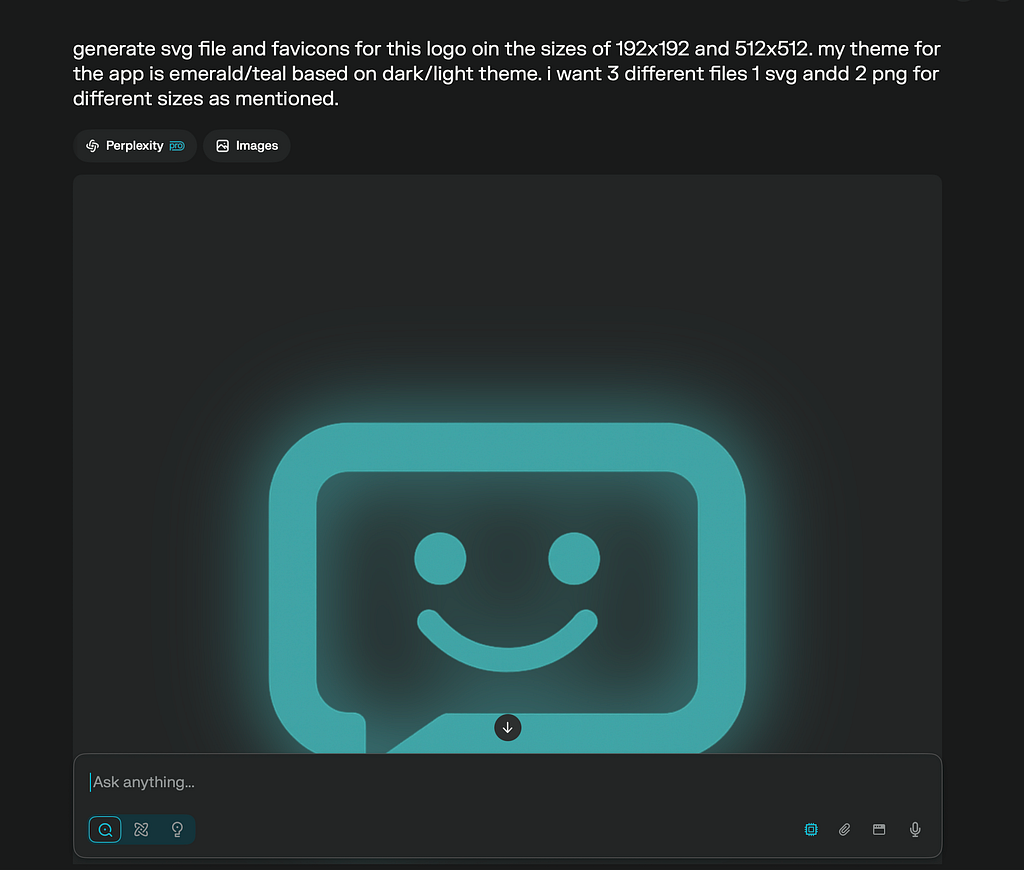
Perhaps the most amusing challenge was trying to generate a logo for Honestbox. I naively thought image generation would be as impressive as code generation. I was wrong.
Cursor’s attempts at logo creation were almost comically bad. I tried Perplexity next, which produced slightly better results but nothing usable. ChatGPT generated decent concepts but couldn’t output in the various formats I needed.
After multiple attempts, I reverted to the traditional approach: converting images between formats manually. This experience highlighted my third major learning: AI tools have dramatically different capabilities across domains. What works brilliantly for code might fail entirely for visual assets.
Security Considerations in the AI Age
Building an anonymous feedback platform comes with inherent security concerns. How do you protect user data while allowing anonymity? How do you prevent abuse without compromising privacy?
I approached this by asking the AI to perform security checks and recommend fixes. This worked surprisingly well — both tools identified potential vulnerabilities I hadn’t considered, like SQL injection risks and missing authentication checks for certain routes.
The AI suggested implementing rate limiting, basic content moderation, and secure storage practices. While I wouldn’t rely solely on AI for security-critical applications, it proved valuable as an additional layer of review — like having a security-minded colleague look over your shoulder.
The Human Element: What AI Couldn’t Do
Despite all the assistance AI provided, there were aspects of development that remained firmly in the human domain:
- Project vision and purpose: AI could implement features but couldn’t tell me why people would want anonymous feedback or how to make the experience meaningful
- User empathy: Understanding how users might feel receiving anonymous comments required human emotional intelligence
- Platform-specific limitations: Navigating Instagram’s restrictions required research and creative problem-solving
These areas highlighted that AI is best viewed as a collaborative tool, not a replacement for the human developer. The most effective approach was directing the AI to handle implementation details while I focused on the creative and human-centered aspects of the project.
What I Would Do Differently
Start With More Structured Planning
If I were to begin again, I’d spend more time upfront defining specific features, user flows, and technical requirements before engaging AI tools. This would have resulted in more precise prompts and fewer iterations needed.
Test Cross-Platform Earlier
The mobile browser issues could have been avoided with earlier cross-platform testing. AI-generated code often looks correct but may have unforeseen issues in specific environments.
Mix AI Tools More Strategically
Rather than starting with one tool and switching to another, I’d use each for its strengths from the beginning: Lovable for initial structure and Cursor for ongoing development and refinement.
The Future of Honestbox and AI-Assisted Development
Building Honestbox transformed my perspective on AI in development. I went from curious skeptic to pragmatic believer — not in AI as a magic solution, but as a powerful collaborator that changes how developers work.
As for Honestbox itself, it remains a simple web app for now. I haven’t implemented monetization strategies yet, though there’s potential for premium features or organizational implementations in the future.
The project succeeded in its primary goal: giving me hands-on experience with AI-driven development. It helped me understand both the extraordinary capabilities and the very real limitations of current AI tools.
My Advice for Developers Exploring AI Tools
If you’re curious about incorporating AI into your development workflow, here’s what I learned:
- Be extremely specific in your prompts. The difference between “update this component” and “update this component to be responsive on mobile devices with screen widths between 320px and 480px” is enormous.
- Understand each tool’s strengths. Some excel at boilerplate generation, others at debugging or optimization.
- Always review and test AI-generated code thoroughly. AI can create convincing code that doesn’t actually work as expected.
- Use AI to handle the repetitive aspects of development so you can focus on creative problem-solving and user experience.
- Don’t underestimate the importance of your own development intuition. Sometimes the AI will suggest an approach that technically works but isn’t the best solution.
Conclusion: The Collaborative Future
My journey building Honestbox revealed that the future of development isn’t AI replacing developers — it’s a new kind of collaboration where humans and AI each contribute their strengths. The developer becomes more of a director and problem-solver, while AI handles implementation details and repetitive tasks.
For me, the experience was transformative. What started as a simple side project to learn about AI-driven development became a deep exploration of how these tools are reshaping our industry. The technical skills I gained were valuable, but the insights into this new collaborative workflow were invaluable.
As we move forward in this AI-augmented development landscape, I believe the most successful developers won’t be those who know the most programming languages or algorithms, but those who can effectively direct AI tools while bringing the uniquely human elements of creativity, empathy, and judgment to their projects.
After all, building Honestbox taught me that honest feedback — whether from users or about the development process itself — is how we grow. And that’s a lesson that applies equally well to AI and humans alike.
P.S. Want to give me some anonymous feedback? Drop your thoughts using the Honestbox link. And yes, feel free to use it for yourself too — I built it to be shared!