Job search landscape 2026
Welcome to 2026, where getting a job feels like being stuck in a Black Mirror episode that nobody asked for.
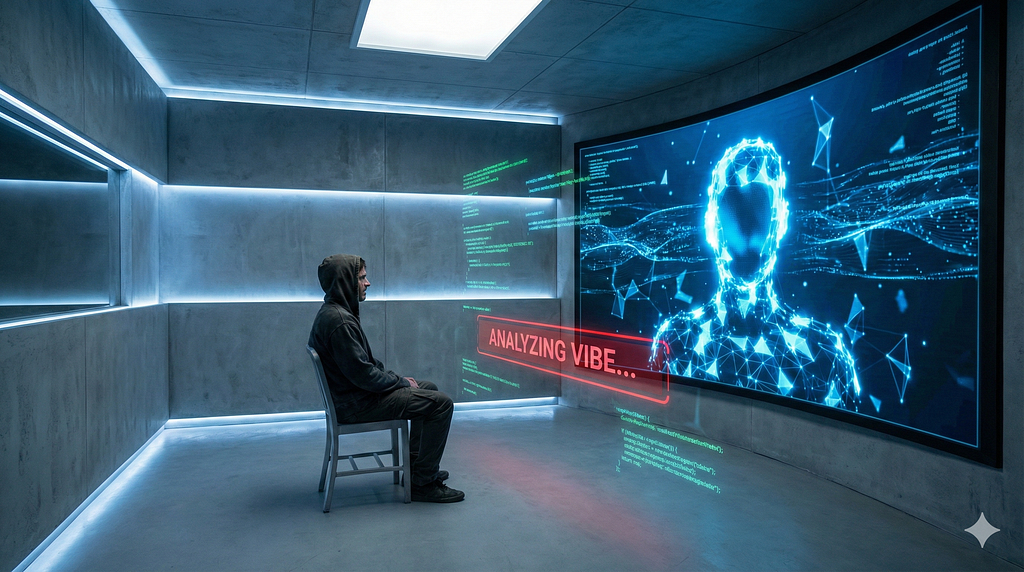
Picture this: You spend hours crafting the perfect resume. You hit “apply.” Within next 3 minutes, an AI rejects you. No feedback. No explanation. Just a cold, automated “thanks, but no thanks” email that arrives faster than your pizza delivery.
Meanwhile, on the other side of the screen, a recruiter is drowning in 1,000+ applications for a single role, because guess what? Applicants are using AI to mass-apply to every job posting on the internet. It’s like watching two bots fight while humans stand in the corner, confused and unemployed.
Welcome to the AI hiring apocalypse. Nobody’s having fun.
The Great AI Standoff
Both sides are trying to survive:
- Recruiters are using AI to filter through applications because they’re drowning in 1,000+ resumes per opening. Their AI overlord reads your carefully crafted resume in 0.3 seconds and goes “NOPE” with all the empathy of a parking meter.
- Applicants are using AI to mass-apply to everything from “Senior Software Engineer” to “Dog Walker (Must Know Python).” They’re submitting 500 applications a week, each one lovingly hallucinated by their favorite large language model.
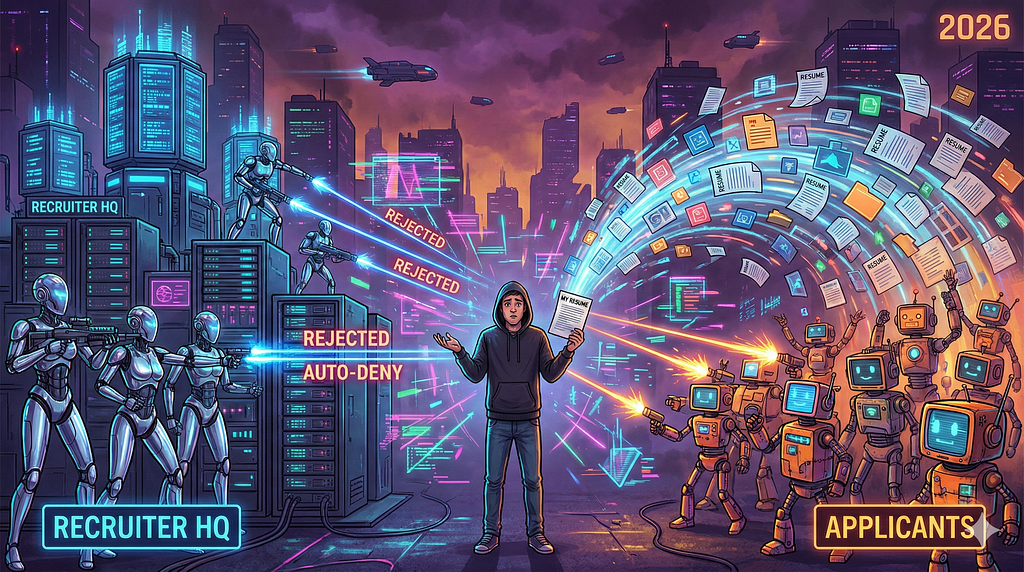
The result? A beautiful, dysfunctional ecosystem where nobody trusts anybody, and everyone’s just hoping the algorithm doesn’t screw them over today.
Throw in fresh graduates, laid-off workers, and constantly shifting business needs, and you’ve got yourself a job market that feels like The Hunger Games, except the prize is a junior developer role that pays in “exposure” and free snacks.
The AI Interview: Where Dreams Go to Get Debugged
Now, some tech giants have decided to lean fully into the chaos. Meta and friends are experimenting with AI-assisted interviews, where you’re allowed to use AI during the interview.
Sounds great, right? WRONG.
These aren’t your leetcode problems with a twist anymore. They’re complex, multi-layered nightmares designed to separate the “I understand what this code does” crowd from the “I asked ChatGPT and it gave me something that compiles” crowd.
As NeetCode brilliantly puts it in his video on Coding Interviews in 2026,
- DSA isn’t dead. Major AI companies (Anthropic, OpenAI) still ask algorithm questions because they want to know you actually understand code.
- “Vibe coding” is a trap. That’s when you blindly trust AI output without checking if it’s correct, performant, secure, or maintainable. Spoiler: It usually isn’t.
Here’s the harsh truth: AI is great, but if you let it steer the wheel, you’re toast.
An engineer in 2026 needs to know when to use AI and when to actually think. The ability to evaluate AI-generated code, its pros, cons, and correctness, is what separates a “competent developer” from someone who’s about to be replaced by ChatGPT.
By this definition, more than 50% of young developers are now unskilled for AI-assisted engineering roles.
Ouch.
That’s the new skill: babysitting the AI. Making sure it doesn’t write code that accidentally deletes the production database or exposes user data to everyone on the internet.
The 70% Problem (Or: Why Junior Devs Are Screwed)
The Pragmatic Engineer describes what he calls the “70% problem” in his article How AI-assisted coding will change software engineering:
How AI-assisted coding will change software engineering: hard truths
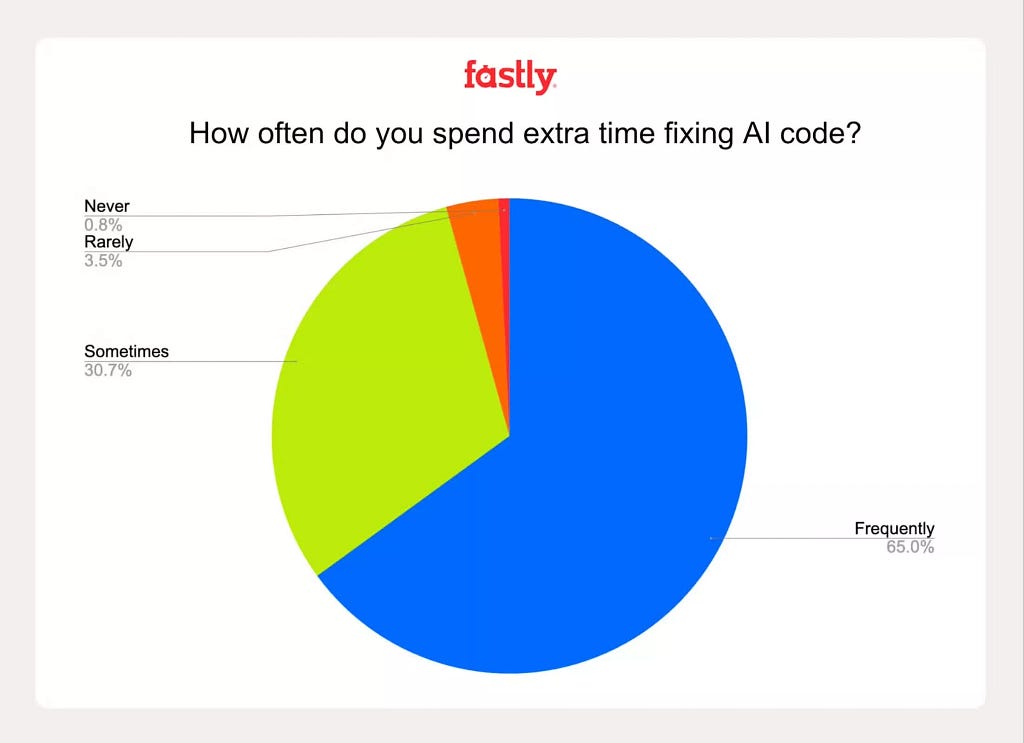
For non-engineers and juniors, AI is magical. You describe what you want, and boom — working prototype. But then come the edge cases. The bugs. The performance issues. The security holes. The “why does this crash when I press this button?” moments.
Without solid mental models, you enter the “two steps back” loop: You ask AI to fix the bug. AI introduces a new bug. You ask AI to fix that bug. Now nothing works. You cry.
For senior engineers, AI is like having a very fast (but occasionally confused) junior developer on the team. They know how to guide it, refactor its output, add the missing pieces, and turn garbage into gold.
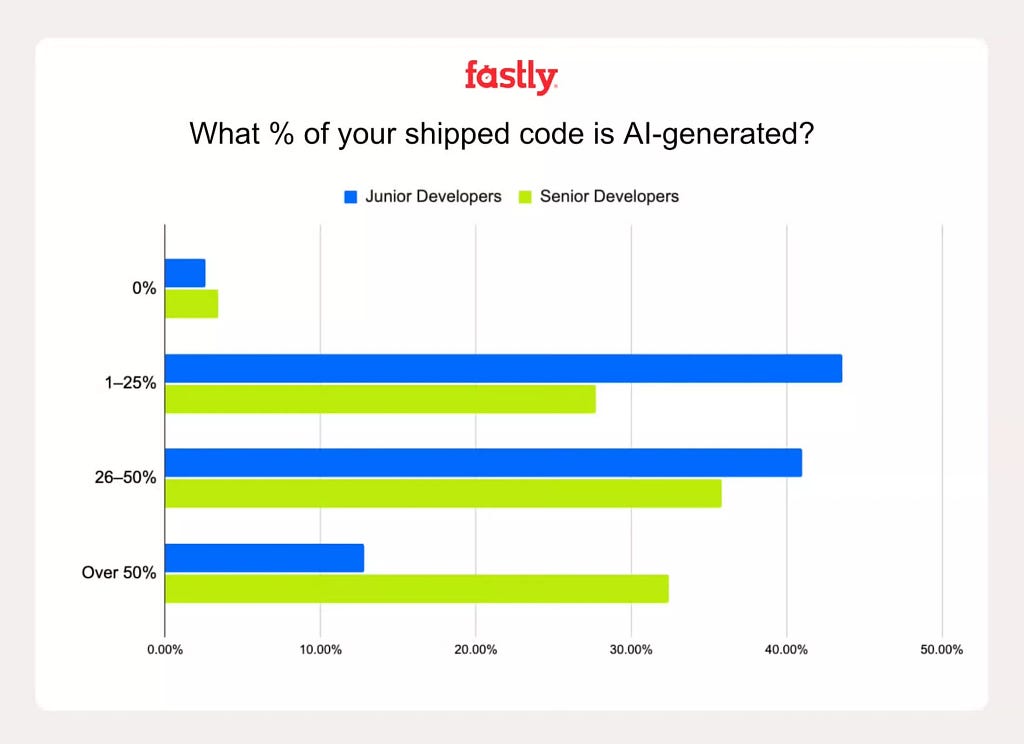
For juniors, the same tools become a crutch. They accept weak solutions, skip important concerns, and never build the deep debugging or design skills they need.
This is the “knowledge paradox”: Those who already know more benefit more from AI. Those who know less get left behind.
The “No Developers Needed” Delusion (Again)
The tech industry has been chasing the dream of “no developers needed” for decades:
- COBOL (we’ll just write in English!)
- Visual Basic (drag and drop = programming!)
- No-code tools (anyone can build apps!)
- GenAI (just describe what you want!)
Spoiler: It never works.
Higher-level abstractions don’t make software easier to maintain — they make it harder. As AI lowers the barrier to creating code, we’ll see more code and more complexity, which means we’ll need more experienced engineers to clean up the mess.
Good engineers who master AI-assisted development become both more productive and more valuable.
Bad engineers who rely on AI without understanding it become obsolete.
Choose wisely.
Recruiters: “AI Makes Hiring Better!” (Narrator: It Doesn’t)
Let’s talk numbers, courtesy of Boterview’s AI recruitment statistics:
- 87% of organizations now use AI in hiring. That’s almost everyone.
- 67% of hiring leaders say the main benefit is “time savings.” Translation: “We can reject you faster now.”
- 19% of organizations admit their AI tools accidentally ignore qualified candidates. And that’s just the ones willing to admit it.
Here’s my favorite stat: 66% of job seekers say they would NOT apply to companies that use AI to make hiring decisions.
So let me get this straight: Companies are using AI to save time, but they’re also accidentally filtering out good candidates and scaring away two-thirds of applicants who know what’s happening.
This is fine. Everything is fine.
Why Job Seekers Hate AI Recruitment?
- Zero feedback. You get rejected and have no idea why. Was it your experience? Your wording? The fact that you once listed “Microsoft Office” as a skill? The AI knows, but it’s not telling.
- Inherited bias. AI models are trained on historical data, which means they inherit all the biases baked into that data. If your training set thinks “software engineer” means “white guy named Chris,” congratulations — you just automated discrimination.
- No human context. AI doesn’t care why you switched careers. It doesn’t care that you spent three years caregiving. It doesn’t care about your potential, your hustle, or your story. It just sees keywords and makes a decision in milliseconds.
And yet! 30% of recruiters use AI to write job descriptions, which explains why every posting now reads like it was written by a bot having an existential crisis:
“We’re looking for a rockstar ninja wizard with 10+ years of experience in a technology that’s been around for 5 years. Must be passionate about disrupting synergies.”
So… What Now?
Here’s the hard truth, friends:
The bar hasn’t been lowered. It’s been moved much more higher.
The new skillset isn’t “can you code?” It’s “can you think?”
Can you:
- Evaluate AI output for correctness, performance, security, and maintainability?
- Debug code you didn’t write?
- Make architectural decisions when AI gives you six different answers?
- Know when not to trust the AI?
Thinking is the new coding.
And for job seekers navigating this AI-powered hellscape? You need to:
- Upskill constantly (yes, I know, exhausting)
- Make yourself visible in ways AI can’t replicate
- Network like your life depends on it (because it kinda does)
- Learn to work with AI, not just use it
Oh, and maybe learn to write job applications that don’t sound like they were generated by a slightly drunk GPT-5.2.
The Bottom Line
We’re all stuck in a recursive loop where:
Recruiters use AI to filter candidates → Candidates use AI to apply everywhere → Recruiters get overwhelmed → Recruiters use more AI → Candidates adapt and use more AI → [STACK OVERFLOW ERROR]
The good news? Experienced engineers with strong fundamentals are more valuable than ever. When everyone has access to AI, the differentiator is who can steer it.
The bad news? If you’re early in your career and relying on AI as a crutch instead of a tool, you’re building a house on quicksand.
The absurd news? I lost my job cause i too was relying on AI as a crutch instead of a tool.
I will soon write my learning around AI assisted coding workflows and how i started using AI as a tool again.
Welcome to 2026. The robots aren’t taking over, they’re just making everything really, really weird.
Now if you’ll excuse me, I need to go update my resume. Again. Because apparently, the keyword density wasn’t optimised for the AI screener.